Buffalo Springfield
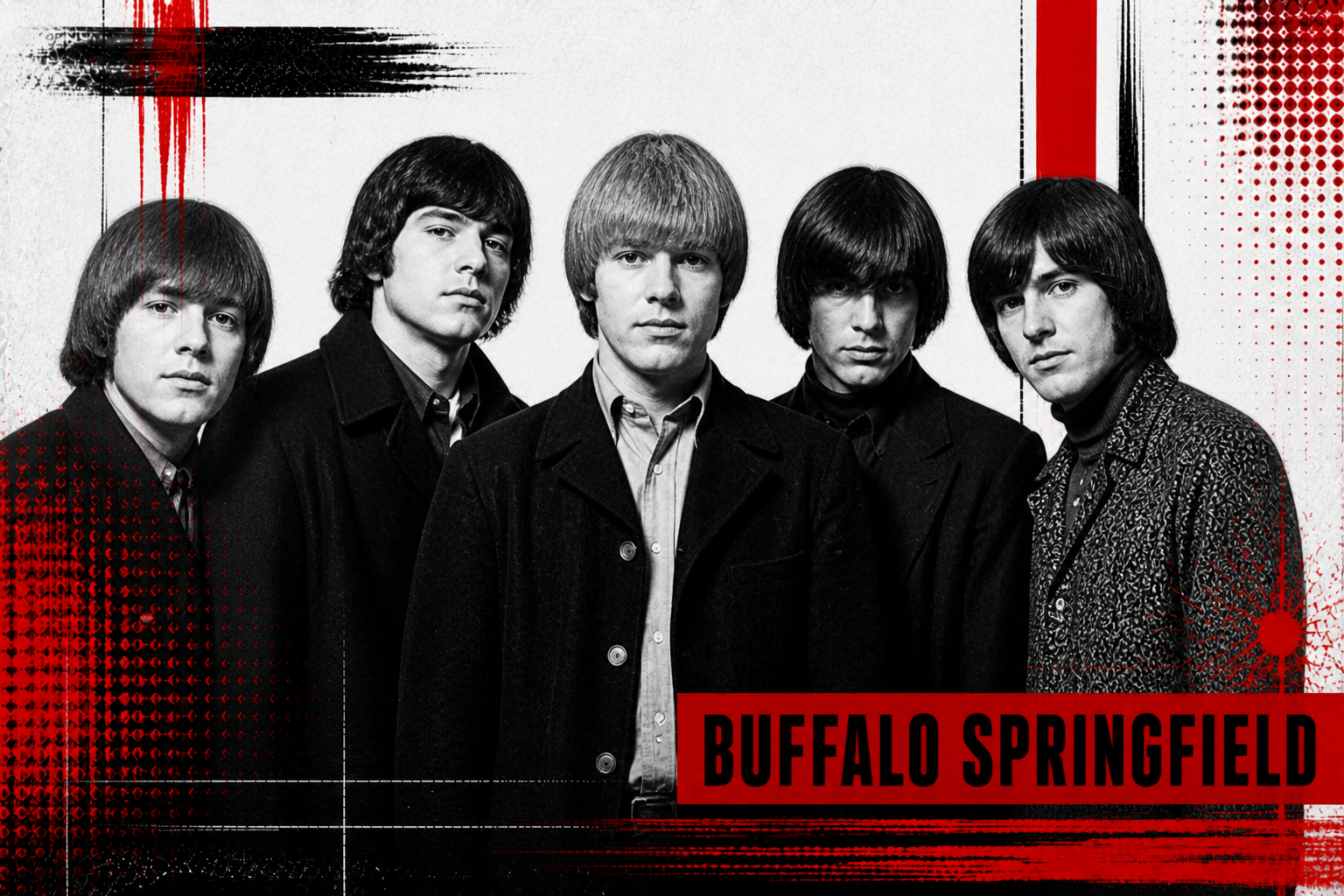
The story of Buffalo Springfield unfolds at a pivotal moment in the 1960s, when folk, rock, and political consciousness began colliding in new and unpredictable ways. Formed in Los Angeles in 1966, the band brought together a group of musicians whose individual identities would later become legendary—Neil Young, Stephen Stills, and Richie Furay among them. What made Buffalo Springfield unique wasn’t just the talent within the lineup, but the creative tension between those voices, each pushing in slightly different directions while contributing to a shared sound that felt both immediate and forward-looking.
Their emergence coincided with the rise of the Sunset Strip scene, where young bands were redefining what rock music could be. Buffalo Springfield quickly distinguished themselves by blending folk-inspired songwriting with electric instrumentation, creating a sound that carried both intimacy and urgency. Their debut album introduced a mix of styles, but it was clear even then that the band was operating with a broader vision—one that incorporated lyrical depth alongside musical experimentation. That balance became central to their identity, allowing them to move fluidly between softer acoustic passages and more forceful, rhythm-driven tracks.
The release of “For What It’s Worth,” written by Stephen Stills, marked a defining moment not only for the band but for the era itself. The song captured a sense of unrest and generational tension that extended far beyond the specific events that inspired it, becoming an enduring reflection of the cultural atmosphere of the late 1960s. Its restrained arrangement, built around a steady groove and understated instrumentation, contrasted with the weight of its message, demonstrating the band’s ability to communicate complex ideas without excess. It remains one of the most recognizable protest songs of its time, continuing to resonate across decades.
Despite their creative potential, Buffalo Springfield’s existence was relatively brief, shaped by internal conflicts, lineup changes, and the pressures of rapid success. These challenges, however, did not diminish the significance of their output. Albums like Buffalo Springfield Again showcased a growing sophistication, with members increasingly exploring their individual artistic directions within the framework of the band. This period of experimentation hinted at the paths they would later take—whether in solo careers or in other influential groups that would further define the sound of American rock music.
The legacy of Buffalo Springfield extends far beyond their short lifespan. They occupy a crucial place in the transition from folk rock to more expansive forms of songwriting and production, helping to lay the groundwork for the singer-songwriter movement that followed. Their music captures a moment of transformation, both culturally and musically, where ideas about identity, politics, and artistic expression were being reshaped in real time. Even with a limited catalog, their influence continues to be felt, carried forward through the enduring relevance of their songs and the lasting impact of the artists who once came together under that name.