The Byrds
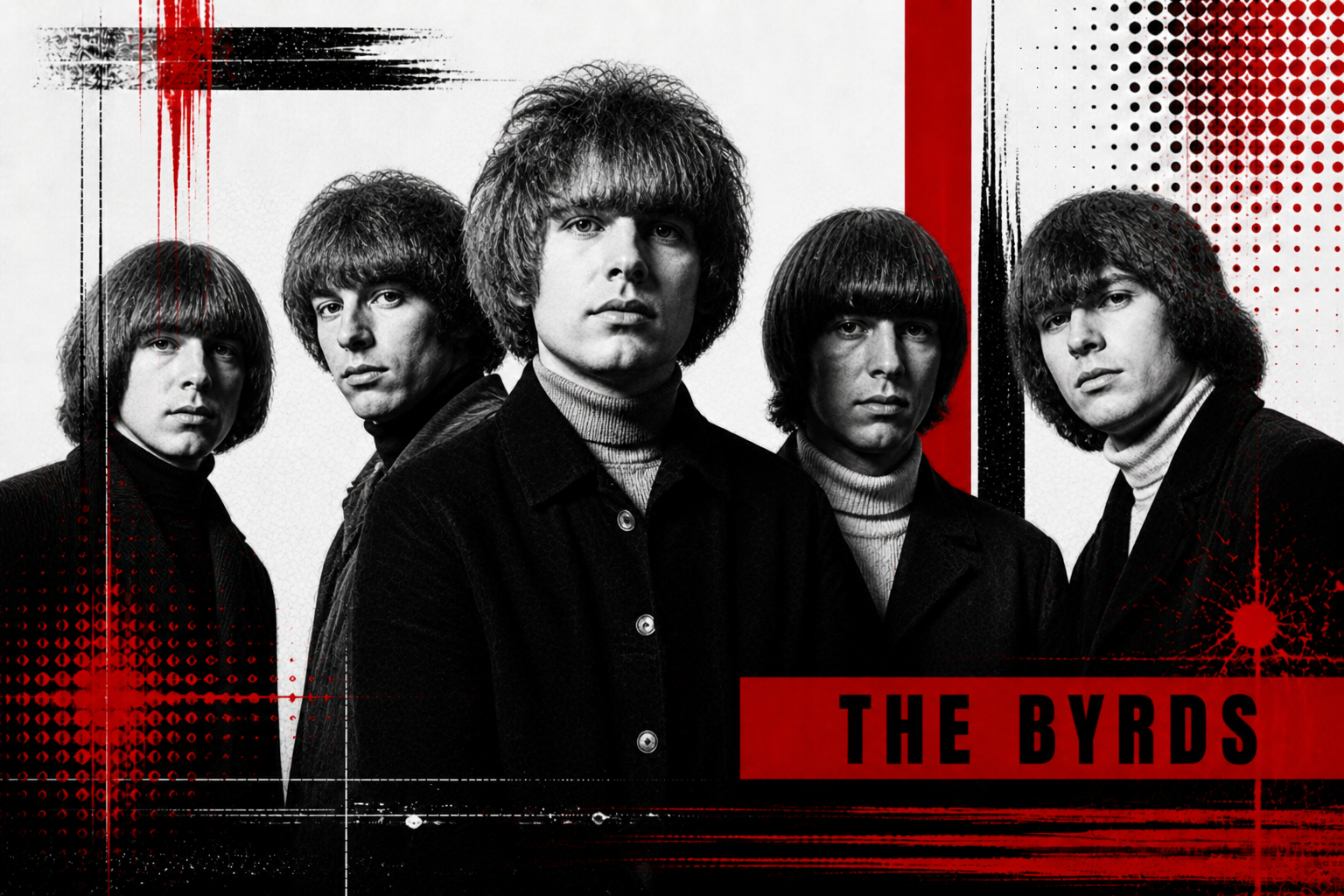
A shimmering twelve-string guitar tone and layered vocal harmonies helped define the unmistakable sound of The Byrds, a group that played a pivotal role in shaping the direction of 1960s rock music. Formed in Los Angeles, the band brought together influences from folk traditions and the emerging energy of rock, creating a hybrid style that would come to be known as folk rock. At the center of that sound was Roger McGuinn, whose distinctive Rickenbacker guitar work gave their recordings a bright, ringing quality that became instantly recognizable.
Their breakthrough arrived with a reinterpretation of “Mr. Tambourine Man,” a song originally written by Bob Dylan. By pairing Dylan’s lyrical depth with an electrified arrangement, The Byrds helped bridge the gap between acoustic folk and mainstream rock audiences. The result was more than a hit single—it was a moment that signaled a shift in how songwriting and production could intersect, opening the door for more introspective and literate approaches within popular music.
As their career progressed, The Byrds expanded beyond their initial folk rock framework, incorporating elements of psychedelia and experimental production. Albums like Fifth Dimension and Younger Than Yesterday reflected a growing interest in texture, atmosphere, and unconventional structures, aligning the band with the broader creative exploration of the late 1960s. Their willingness to evolve allowed them to remain relevant during a period of rapid musical change, even as internal tensions and lineup shifts altered the group’s dynamic.
One of their most influential transitions came with Sweetheart of the Rodeo, where the band moved toward a more pronounced country sound. This shift not only redefined their own identity but also contributed to the early development of country rock as a genre. By blending traditional country instrumentation with rock sensibilities, The Byrds helped establish a template that would later be expanded by numerous artists, extending their influence well beyond their original scene.
The Byrds’ legacy rests in their ability to act as both innovators and connectors within the broader musical landscape. Their work linked folk, rock, psychedelia, and country in ways that reshaped each of those genres, leaving a lasting imprint on the evolution of popular music. Even decades later, the clarity of their sound and the ambition of their approach continue to resonate, reflecting a moment when musical boundaries were not just crossed, but reimagined entirely.