DMX
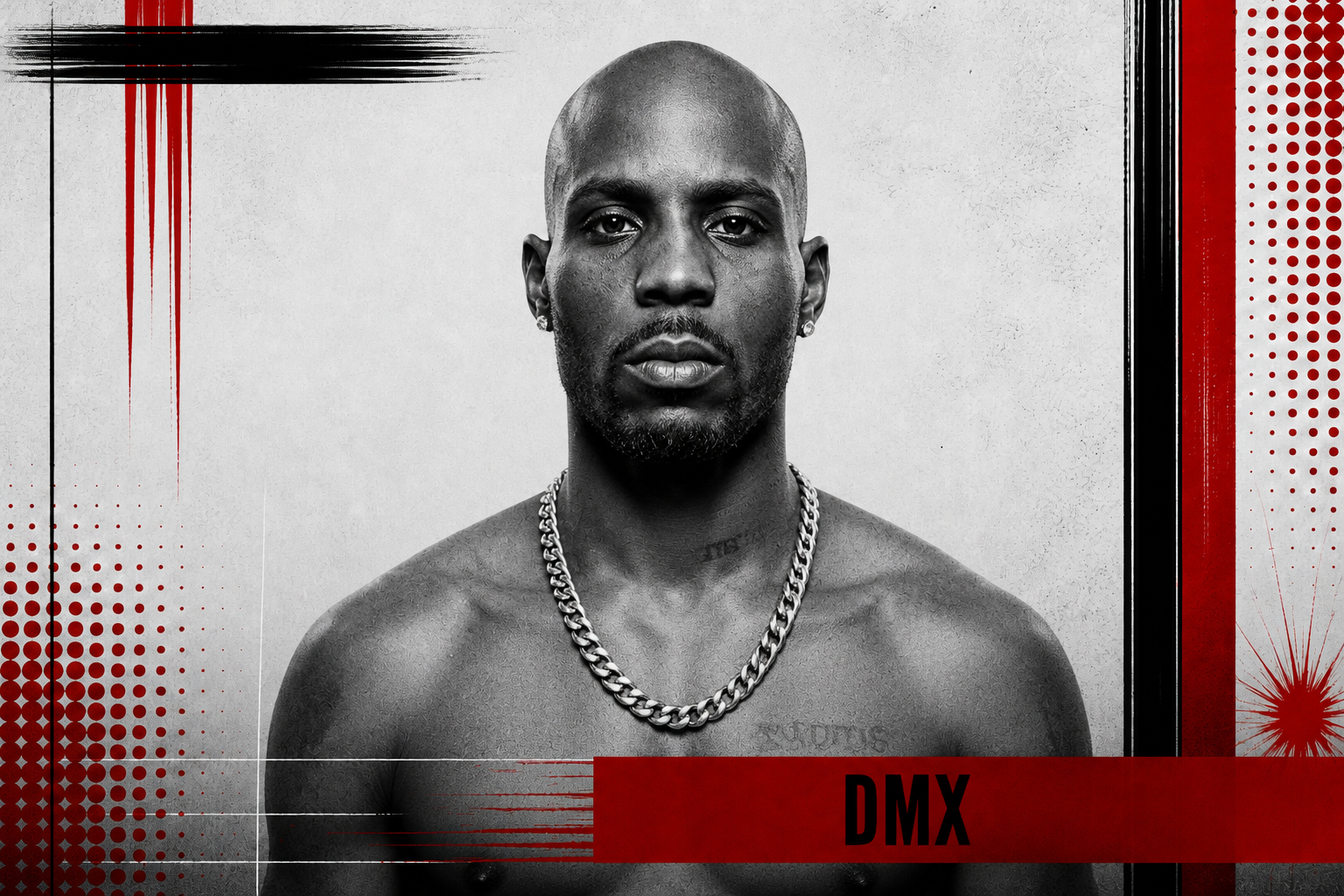
A voice that sounded like it had been dragged through fire and brought back with purpose defined the presence of DMX, an artist who brought a rare level of intensity and spiritual conflict into hip-hop at the turn of the millennium. Emerging from Yonkers, New York, DMX arrived with a style that rejected polish in favor of raw expression, blending aggressive delivery with moments of vulnerability that felt almost confessional. His entrance into the mainstream wasn’t gradual—it was immediate and overwhelming, fueled by a sound and persona that demanded attention.
Before the fame, his life was marked by hardship. Raised in unstable conditions and exposed to trauma at a young age, DMX’s early experiences shaped both his worldview and his art. He often spoke openly about pain, betrayal, and survival, not as abstract ideas but as lived realities. This background gave his music a sense of urgency that couldn’t be manufactured. When he rapped, it felt less like performance and more like release—an outlet for everything he had endured.
His debut album It’s Dark and Hell Is Hot set the tone, presenting a world defined by struggle, faith, anger, and survival. Tracks moved between explosive anthems and introspective reflections, often within the same record, creating a sense of emotional unpredictability that mirrored the themes he explored. His delivery—marked by growls, barks, and urgent cadences—became instantly recognizable, while his lyrics carried a weight that extended beyond typical braggadocio, often addressing inner conflict and moral tension. Songs weren’t just statements; they were confrontations with himself, with his past, and with the world around him.
Momentum continued with Flesh of My Flesh, Blood of My Blood and ...And Then There Was X, projects that expanded his reach while reinforcing his core identity. Songs like “Ruff Ryders’ Anthem” became cultural landmarks, driven by minimalist production that allowed his voice to dominate the track. At the same time, tracks such as “Slippin’” revealed a more reflective side, offering insight into personal struggles and the consequences of past choices. This balance between aggression and introspection became a defining characteristic of his work, setting him apart within a crowded hip-hop landscape.
What made DMX truly unique was his ability to merge spirituality with street reality. He spoke about God with the same intensity he spoke about violence and survival, creating a duality that ran through nearly all of his work. Prayers often appeared in his albums, not as symbolic gestures but as genuine expressions of faith. This openness created a deeper connection with listeners, many of whom saw their own struggles reflected in his words. He wasn’t presenting himself as a hero—he was presenting himself as human.
Beyond music, DMX’s presence extended into film and live performance, where his intensity translated into something physical and almost visceral. Concerts often felt less like traditional shows and more like communal experiences, with audiences responding to his energy in real time. Whether commanding a stage or appearing on screen, he carried the same raw authenticity that defined his recordings. There was no separation between the artist and the man—what you saw was what you got.
Yet his story also carried profound tragedy. His struggles with addiction were well documented and deeply intertwined with his life and career. In April 2021, that struggle reached its most devastating point. DMX’s cause of death was linked to a drug overdose that triggered a heart attack, cutting off oxygen to his brain and leaving him in critical condition. Reports indicated that multiple substances were involved, compounding the severity of the situation and making recovery nearly impossible. He remained on life support for days as fans around the world held onto hope, but ultimately, his family was forced to make the heartbreaking decision to let him go. He passed away at the age of 50.
The reaction to his death was overwhelming. Fans gathered in large numbers to honor him, and tributes poured in from across the music industry. What made the loss so deeply felt was not just his talent, but his honesty. DMX had never hidden his struggles—he had shared them openly, turning his pain into something others could understand. That transparency created a bond with listeners that went far beyond music, making his passing feel intensely personal to millions.
DMX’s legacy is rooted in authenticity and emotional transparency, qualities that continue to resonate with listeners long after his peak commercial period. His work challenged expectations of what hip-hop could convey, opening space for deeper exploration of personal struggle, redemption, and spirituality within the genre. He proved that strength and vulnerability could coexist, and that confronting one’s flaws could be just as powerful as projecting confidence.
His influence can still be felt today. Artists who embrace raw emotion, who speak openly about their struggles, and who treat music as a form of truth-telling owe something to the path DMX helped create. He didn’t just contribute to hip-hop—he expanded its emotional range, pushing it into territory that felt more human, more conflicted, and more real.
In the end, DMX was more than his voice, more than his hits, and more than his struggles. He was a reflection of conflict and conviction, of hardship and hope—an artist who gave everything he had, every time he stepped to the mic. His life was complicated, his journey unfinished, but his impact is undeniable.