Geto Boys
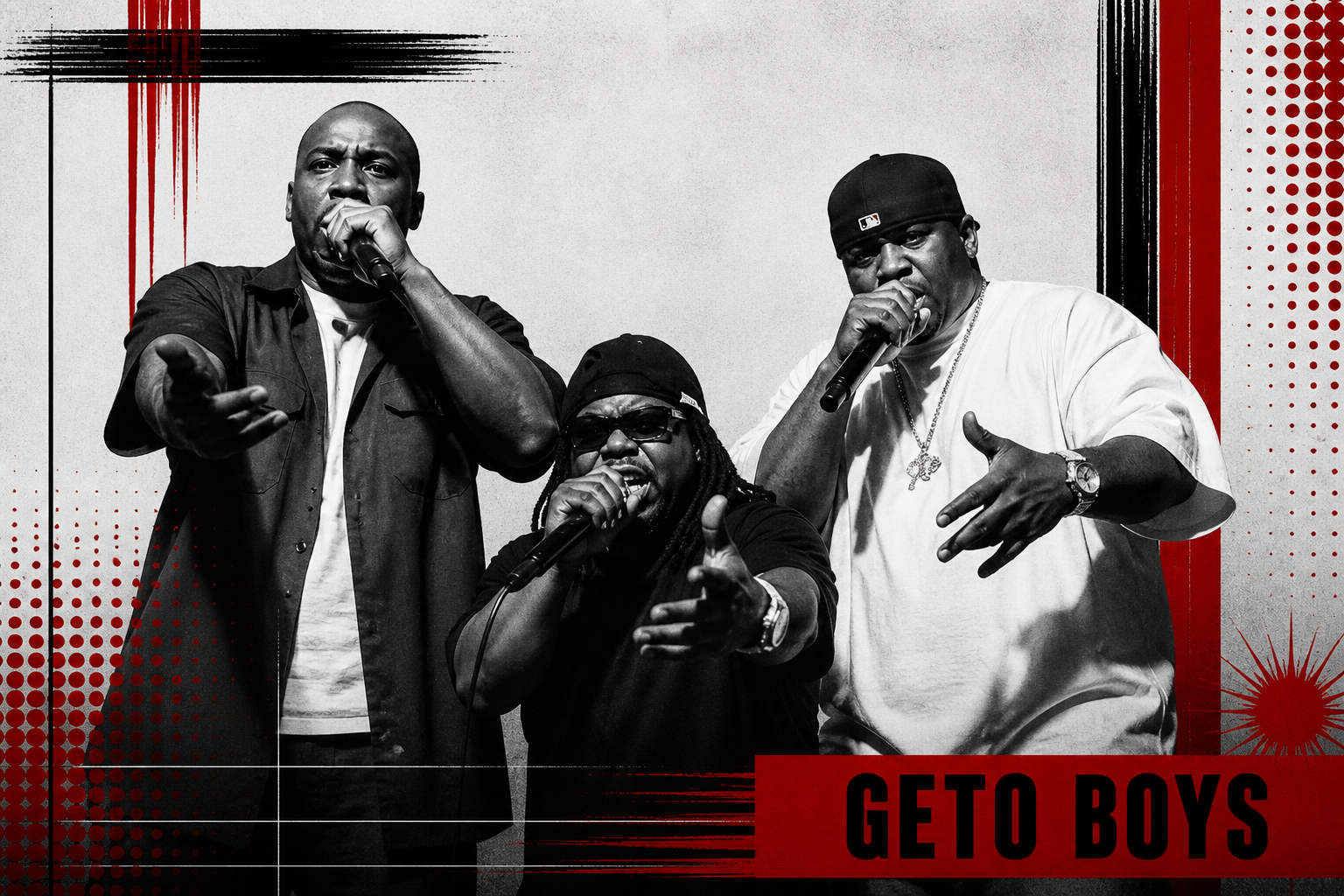
Emerging from Houston during the late 1980s, Geto Boys became one of the most controversial, influential, and groundbreaking groups in hip-hop history. Known for their uncompromising lyrics, vivid storytelling, dark humor, and emotionally intense subject matter, the group helped redefine Southern rap while proving that hip-hop outside of New York and Los Angeles could command national attention and shape the future of the genre.
The group’s classic lineup consisted of Scarface, Willie D, and Bushwick Bill, though the collective went through multiple lineup changes during its early years. Their rise coincided with the emergence of Houston as a growing force in hip-hop, a movement fueled in part by the influence of Rap-A-Lot Records and founder J. Prince, who played a major role in bringing Southern rap into the national spotlight.
What separated the Geto Boys from many of their contemporaries was their willingness to explore themes that were often considered too disturbing, personal, or confrontational for mainstream audiences. Their music tackled street violence, paranoia, systemic inequality, mental illness, fear, depression, and survival with an intensity that felt cinematic and emotionally raw. Rather than presenting exaggerated fantasy alone, many of their songs carried an unsettling realism that made listeners feel immersed inside the psychological world of the narratives.
Their 1990 album The Geto Boys became a turning point, helping establish the group nationally despite widespread controversy and resistance from retailers and distributors uncomfortable with the group’s lyrical content. Instead of slowing the group down, the controversy amplified their reputation as fearless outsiders unwilling to compromise their artistic identity.
The following year, the release of We Can't Be Stopped pushed the group even further into the cultural conversation. The album’s cover — featuring Bushwick Bill being wheeled through a hospital after surviving a gunshot wound — became one of the most infamous images in hip-hop history. Far from being shock value alone, the image reflected the chaotic realism surrounding the group’s music and personal lives during that era.
One of the group’s most celebrated tracks, Mind Playing Tricks on Me, remains widely regarded as one of the greatest hip-hop songs ever recorded. The track broke away from traditional rap bravado by focusing on anxiety, paranoia, trauma, and psychological instability. At a time when vulnerability in rap was relatively rare, the song offered a deeply human portrayal of fear and emotional pressure within street life. Its haunting atmosphere and introspective storytelling helped elevate hip-hop’s emotional and narrative possibilities.
Scarface, in particular, emerged as one of rap’s most respected lyricists and storytellers, known for his reflective writing style and emotionally layered delivery. His influence would eventually extend far beyond the Geto Boys, inspiring generations of artists across multiple regions and styles. Willie D brought a direct, confrontational energy rooted in sharp social commentary and aggressive delivery, while Bushwick Bill’s unpredictable charisma and unique perspective helped give the group a personality unlike any other act in hip-hop at the time.
The Geto Boys also played a critical role in legitimizing Southern hip-hop nationally. Before the rise of artists from Houston, Atlanta, Memphis, and other Southern cities, the rap industry was heavily concentrated around coastal scenes. The group helped open doors for future Southern artists by proving that powerful, commercially viable hip-hop could emerge from entirely different regional experiences and sounds.
Their influence can be heard across horrorcore, gangsta rap, Southern rap, and psychologically driven hip-hop storytelling. Artists from multiple generations have cited the Geto Boys as pioneers who expanded the emotional and thematic boundaries of rap music. Their willingness to confront uncomfortable realities, both personal and societal, gave their music a lasting intensity that continues to resonate decades later.
Despite internal conflicts, lineup changes, and long periods of inactivity, the Geto Boys’ legacy remained firmly intact within hip-hop culture. The passing of Bushwick Bill in 2019 marked the end of an era for many fans, but the group’s impact on music history continues to endure through their recordings and influence.
More than simply controversial figures, the Geto Boys helped push hip-hop into darker, deeper, and more psychologically complex territory. Their music challenged audiences, broke regional barriers, and demonstrated that rap could function not only as entertainment, but as intense personal expression and social reflection. In doing so, they secured their place as one of the most important and fearless groups in the evolution of hip-hop.