Velvet Revolver
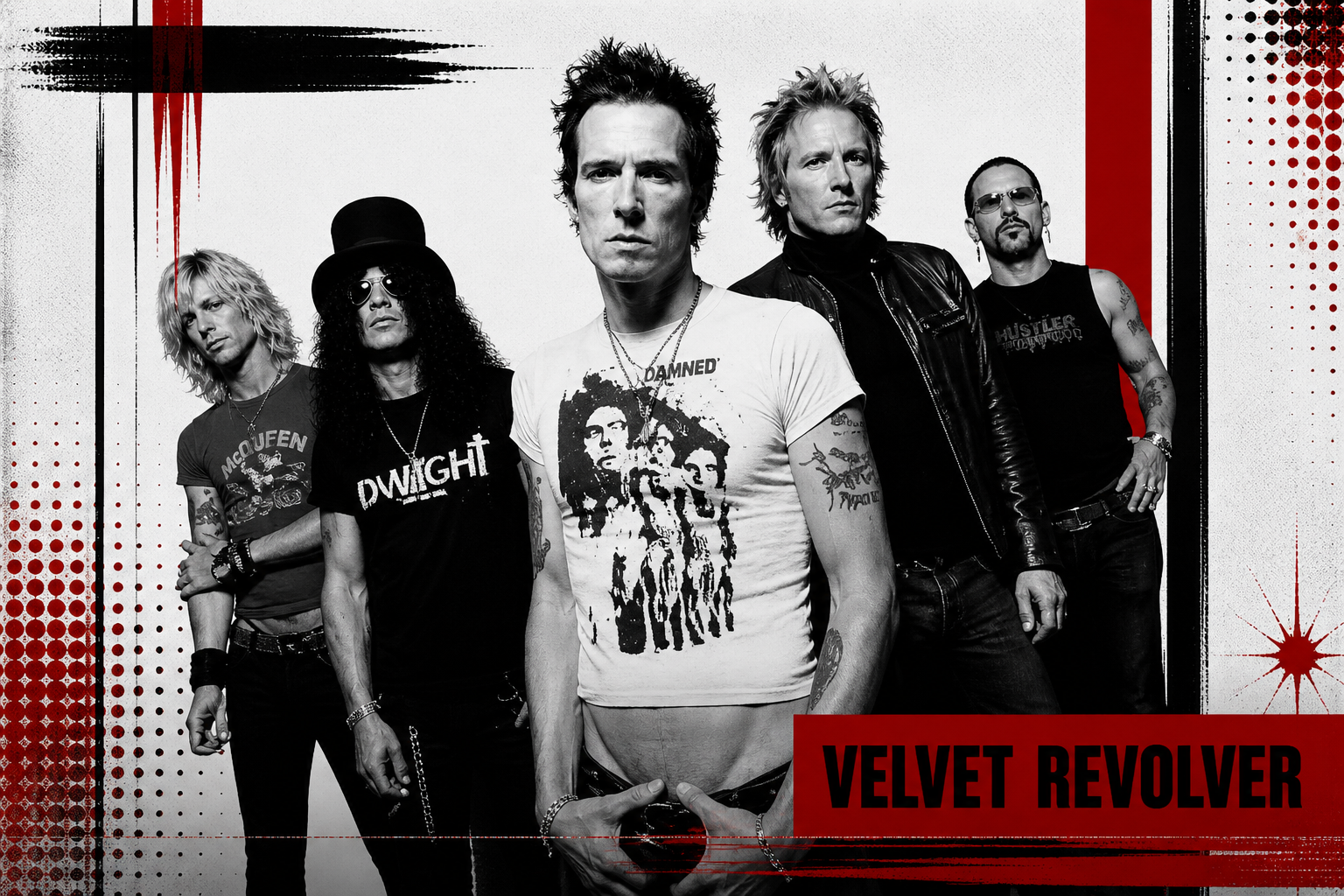
Hard rock in the early 2000s found a sharp, revitalized edge through Velvet Revolver, a band formed from the collision of seasoned musicians with a shared history and a desire to reassert guitar-driven music in a changing landscape. Built around members of Guns N' Roses—including Slash, Duff McKagan, and Matt Sorum—alongside vocalist Scott Weiland of Stone Temple Pilots, the group combined distinct musical backgrounds into a sound that felt both familiar and newly energized.
The band’s debut album Contraband arrived with immediate impact, driven by tight riffs, focused songwriting, and a sense of urgency that cut through the polished production trends of the time. Tracks like “Slither” showcased the chemistry between Slash’s guitar work and Weiland’s vocal delivery, blending grit with melody in a way that resonated across rock audiences. Rather than relying solely on nostalgia, the album positioned Velvet Revolver as an active force, capable of delivering music that felt current while drawing from the strengths of its members’ past experiences.
At the core of the band’s identity was the interplay between its components. Slash’s guitar tone provided a recognizable anchor, while McKagan’s bass lines and Sorum’s drumming created a rhythmic foundation that balanced precision with drive. Weiland, known for his adaptability as a vocalist, brought a dynamic range that allowed the band to explore different textures, shifting from aggressive passages to more restrained, melodic moments. This combination gave Velvet Revolver a versatility that extended beyond straightforward hard rock, incorporating elements of alternative and classic rock into a cohesive sound.
The follow-up album Libertad continued to build on that framework, refining the band’s approach while maintaining its core energy. Although internal tensions and external pressures would eventually impact the group’s trajectory, the music itself reflected a commitment to craftsmanship and performance. Their live shows, characterized by high energy and tight execution, reinforced the sense that Velvet Revolver was more than a studio project—it was a functioning band driven by collective chemistry.
Velvet Revolver’s legacy is tied to a specific moment when experienced musicians came together to create something that bridged eras of rock music. They demonstrated that established artists could collaborate in ways that felt purposeful rather than retrospective, producing work that stood on its own merits. While their time as a band was relatively brief, the impact of their recordings and performances continues to resonate, representing a chapter where hard rock reasserted its presence with clarity and conviction.