Poco
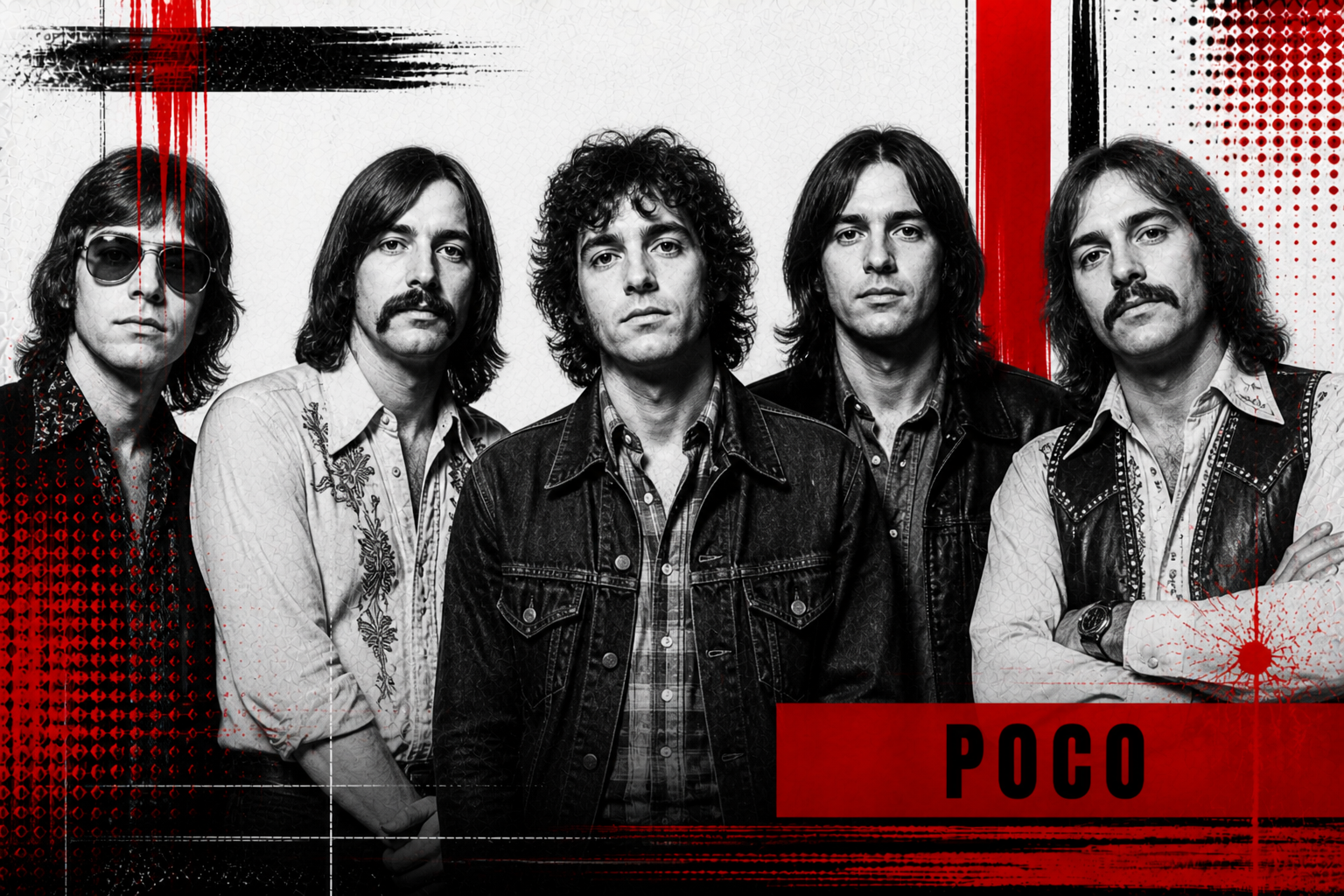
The emergence of Poco marked a subtle but important shift in the evolution of American music, where the boundaries between rock and country began to blur into something more fluid and expressive. Formed in the late 1960s out of the aftermath of Buffalo Springfield, the group carried forward a spirit of experimentation while leaning more deeply into country influences. At the center of its early identity was Richie Furay, whose vision helped shape a sound that would later become foundational to the country rock movement.
From the beginning, Poco distinguished itself through a careful balance of harmony-driven songwriting and instrumental finesse. Their debut album *Pickin’ Up the Pieces* introduced a style that blended the warmth of country instrumentation—particularly pedal steel guitar—with the structure and accessibility of rock. This approach created a sound that felt both rooted and progressive, allowing the band to explore themes of movement, longing, and personal reflection without being confined to a single genre identity. The interplay between vocals and instrumentation became a defining characteristic, giving their recordings a sense of cohesion and emotional clarity.
As the band evolved, so did its lineup, with notable contributions from musicians like Rusty Young, whose pedal steel work became a signature element of Poco’s sound. Throughout the 1970s, the group released a series of albums that expanded their musical range, incorporating elements of folk, pop, and even light rock while maintaining their core identity. Although mainstream commercial success was not always immediate, their influence steadily grew, particularly among artists who would later define the country rock genre on a larger scale.
By the time albums like *Legend* arrived, Poco had refined their approach into something more polished and accessible, achieving greater visibility with tracks that resonated on radio and with broader audiences. This period demonstrated the band’s ability to adapt without losing their essence, smoothing some of the rougher edges of their earlier work while preserving the melodic and harmonic strengths that defined them. Their music during this era reflected a maturity that came from years of evolution, both as individuals and as a collective.
Poco’s legacy is often measured not only by their own catalog but by the path they helped create for others. They exist as a crucial link between the experimental spirit of late-1960s rock and the more refined country rock sound that would dominate parts of the 1970s and beyond. Their work continues to resonate with listeners who appreciate the seamless blending of genres and the emphasis on musicianship and harmony. In that sense, Poco remains less about any single moment of success and more about a lasting contribution to the shape and direction of American music.